
Aerodynamics
Advanced Aerodynamics Simulation for Performance and Efficiency
Our aerodynamic simulation approach provides detailed insight into airflow behavior around and within complex systems. It enables a deep understanding of flow structures, pressure distribution, thermal effects, and their impact on performance, efficiency, and user comfort under realistic operating conditions.
The analysis is applicable to a wide range of engineering challenges, including:
- External and internal aerodynamics simulations
- Thermal effects modeling including convection, conduction and radiation
- Interior aero-acoustics calculations
- Fluid-structure interaction (FSI) analyses
- Water management and soiling studies
- Optimization of steady-state and transient CFD methodologies
Contact our engineers to get expert support and leverage simulation to optimize aerodynamic and thermal performance:
- Analyze and optimize external airflow and drag characteristics
- Improve cooling performance and thermal management strategies
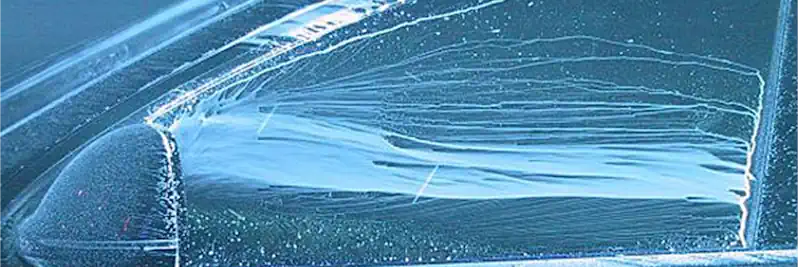
- Predict and mitigate soiling on critical surfaces (e.g., side windows, mirrors)
- Evaluate aero-acoustic behavior and interior comfort
- Perform CFD-driven design optimization (steady-state & transient)
- Support development with robust, validated methodologies
Example Application - Water Crossing & Soiling (FSI)
In demanding environmental conditions such as heavy rain or snow, aerodynamic design plays a critical role in maintaining visibility and safety:
- Vehicle body design in the A-pillar and side mirror area must prevent side window soiling
- Driver visibility to the side mirror must remain unobstructed under all weather conditions
Fluid-structure interaction simulations help predict water behavior, splash dynamics, and droplet transport.
Whether you are optimizing an existing design or developing a new concept, our engineers help you achieve improved aerodynamic efficiency, thermal performance, and environmental robustness through advanced CFD and multi-physics simulation.